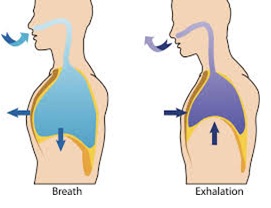
The breathing in men and women is very irregular. In exhalation the Prana goes out 16 digits and in inhalation only 12 digits, thus losing 4 digits. But if you inhale for 16 digits as in exhalation, then you will have rhythmical breathing. Then the power Kundalini will be roused. By the practice of rhythmical breathing you will enjoy real god rest. You can control the respiratory centre that is situated in medulla oblongata and other nerves also, because the centre of respiration has a sort of controlling effect on other nerves. He who has calm nerves, has a calm mind also.
If the units of exhalation and inhalation are the same, you will have rhythmical breathing. If you inhale till you count 6 Oms, exhale also till you count 6 Oms. This is breathing in and out in a measured manner. This will harmonise the whole system. This will harmonise the physical body, mind, Indriyas and will soothe the tired nerves. You will experience full repose and calmness. All the bubbling emotions will subside and the surging impulses will calm down.
There is another variety of modification of rhythmic breathing. Inhale slowly through both nostrils for 4 Oms; retain the breath for 9 Oms (internal Kumbhaka); exhale slowly through both nostrils for 4 Oms; and retain the breath outside (external Kumbhaka) for 8 OMS.
Repeat the above process a number of times according to your strength and capacity. You can gradually increase the duration of inhalation and exhalation after some practice to 8 Oms and the period between breaths to 16 Oms. But never try to increase the duration until you are sure that you have power and strength to do so. You must experience joy and pleasure in doing the same. You should not feel any undue strain. Pay considerable attention to keep up the rhythm. Remember that the rhythm is more important than the length of breath. You must feel the rhythm throughout your whole body. Practice will make you perfect. Patience and perseverance are needed.
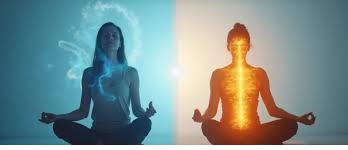
Sit on Padmasana or Siddhasana. Close the eyes. Keep the left nostril closed with your right ring and little fingers. Slowly inhale without making any sound as long as you can do it comfortably through the right nostril. Then close the right nostril with your right thumb and retain the breath firmly pressing the chin against the chest (Jalandhara Bandha). Hold on the breath till perspiration oozes from the tips of the nails and the roots of the hairs (hair folicles). This point cannot be reached at the very outset. You will has to increase the period of Kumbhaka gradually. This is the limit of the sphere of practice of Surya Bheda Kumbhaka. Then exhale very slowly without making any sound through the left nostril by closing the right nostril with the thumb. Repeat Om mentally with Bhava and meaning during inhalation, retention and exhalation. Exhale after purifying the skull by forcing the breath up.
This Pranayama should again and again be performed, as it purifies the brain and destroys the intestinal worms and diseases arising from excess of wind (Vayu). This removes the four kinds of evils caused by Vayu and curses Vata, or Rheumatism. It cures rhinitis, cephalalgia and virious sorts of neuralgia. The worms that are found in the frontal sinuses are removed. It destroys decay and death, awakens Kundalini Sakti and increase the bodily fire.
Sit in Padmasana or Siddhasana. Close the mouth. Inhale slowly through both the nostrils in a smooth, uniform manner till the breath fills the space from the throat to the heart.
Retain the breath as long as you can do it comfortably and then exhale slowly through the nostril by closing the right nostril with your right thumb. Expand the chest when you inhale. During inhalation a peculiar sound is produced owing to the partial closing of glottis. The sound produced during inhalation should be of a mild and uniform pitch. It should be continuous also. This Kumbhaka may be practised even when walking or standing. Instead of exhaling through the left nostril, you can exhale slowly through both nostrils.
This removes the heat in the head. The practitioner becomes very beautiful. The gastric fire is increased. It removes all the evils arising in the body and the Dhatus and cures Jalodara (dropsy of the belly or ascites). It removes phlegm in the throat, asthma, consumption and all sorts of pulmonary diseases are cured. All works are accomplished by Ujjayi Pranayama. The practitioner is never attacked by diseases of phlegm, nerves, dysentery, enlarged spleen, consumption, cough or fever. Perform Ujjayi to destroy decay and death.
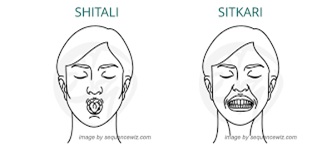
Fold the tongue so that the tip of the tongue might touch the upper palate and draw the air through the mouth with a hissing sound C C C C C (or Si, Si, Si, Si). Then retain the breath as long as you can without the feeling of suffocation and then exhale slowly through both nostrils. You can keep the two rows of teeth in contact and then inhale the air through the mouth as before.
The practice enhances the beauty of the practitioner and vigour of his body. It removes hunger, thirst, indolence and sleep. His strength will be just like that of Indra. He becomes the lord of Yogins. He is able to do and undo things. He becomes an independent monarch. He becomes invincible. No injury will effect him. When you are thirsty, practise this. You will be relieved of thirst immediately.
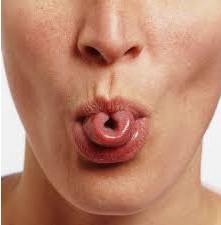
Protrude the tongue a little away from the lips. Fold the tongue like a tude. Draw in, the air through the mouth with the hissing sound Si. Retain the breath as long as you can hold on with comfort. Then exhale slowly through both nostrils. Practise this daily again and again in the morning from 15 to 30 times. You can do this either on Padmasana, Siddhasana, Vajrasana or even when you stand or walk.
This Pranayama purifies the blood. It quenches thirst and appeases hunger. It cools the system. It destroys Gulma (chronic dyspepsia), Pleeha, inflammation of various chronic diseases, fever, consumption, indigestion, bilious
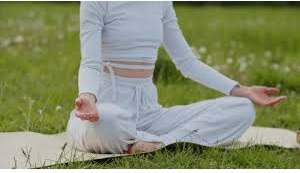
In Sanskrit Bhastrika means ‘bellows.’ Rapid succession of forcible expulsion is a characteristic festure of Bhastrika. Just as a blacksmith blows his bellows rapidly, so also you should move your breath rapidly.
Sit on Padmasana. Keep the body, neck and head erect. Close the mouth. Next, inhale and exhale quickly ten times like the bellows of the blacksmith. Constantly dilate and contract. When you practise this Pranayama a hissing sound is produced. The practice t his Pranayama a hissing sound is produced. The practitioner should start with rapid expulsions of breath following one another in rapid expulsions of breath following one another in rapid succession. When the required number of expulsions, say ten for a round, is finished, the final expulsions, say ten for a round, is finished, the final expulsion is followed by a deepest possible inhalation. The breath is suspended as long as it could be done with comfort. Then deepest possible exhalation is done very slowly. The end of this deep exhalation completes one round of Bhastrika. Rest a while after one round is over by taking a few normal breaths. This will give you relief and make you fit for starting the second round. Do three rounds daily in the morning. You can do another three rounds in the evening also. Busy people who find it difficult to do three rounds of Bhastrika daily can do one round at least. This also will keep them quite fit.
Bhastrika is a powerful exercise. A combination of Kapalabhati and Ujjayi makes up Bhastrika. Practise Kapalabhati and Ujjayi to start with. Then you will find it very easy to do Bhastrika.
Some prolong the practice till they get tired. You will get perspiration profusely. If you experience any giddiness stop the practice and take a few normal breaths. Continue the practice after the giddiness has vanished. Bhastrika can be done both in the morning and evening in winter. In summer do it in the morning only during cool hours.
Bhastrika relieves inflammation of the throat, increases gastric fire, destroys phlegm, removes diseases of the nose and chest and eradicated asthma, consumption, etc. it gives good appetite. It breaks the three Granthis or knots viz., Brahma Granthi, Vishnu Granthi and Rudra Granthi. It destroys phlegm which is the bolt or obstacle to the door at the mouth of Brahma Nadi (Sushumna). It enables one to know the Kundalini. It removes all diseases which arise from excess of wind, bile and phlegm. It gives warmth to the body. When you have no sufficient warm clothing in a cold region to protect yourself from cold, practise this Pranayama and you will get sufficient warmth in the body quickly. It purifies the Nadis considerably. It is the most beneficial of all Kumbhakas. Bhastrika Kumbhaka should be specially practised as it enables the Prana to break through the three Granthis or knots that are firmly located in the Sushumna. It awakens the Kundalini quickly. The practitioner will never suffer from any disease. He will always be healthy.
The number of exhalations or rounds is determined by the strength and capacity of the practitioner. You must not go to extremes. Some students do six rounds. Some do twelve also. Repeat Om mentally with Bhava and meaning throughout the practice.
There are some varieties of Bhastrika wherin one nostril only is used for breathing purposes and in another variety the alternate nostrils are used for inhalation and exhalation.
Those who wish to do Bhastrika for a long time in an intense manner should live on Kitchidi, and take an enema or do Basti in the morning before starting the practice.

Sit on Padmasana or Siddhasana. Inhale rapidly through both nostrils making sound of Bhramara, the bee, and exhale rapidly through both nostrils, making the humming sound. You can carry the process till the body is bathed in perspiration. In the end inhale through both nostrils, retain the breath as long as you can do it comfortably and then exhale slowly through both nostrils. The joy which the practitioner gets in making this Kumbhaka is unlimited and indescribable. In the beginning, heat of the body is increases as the circulation of blood is quickened. In the end the bodyheat is decreased by perspiration. By success in this Brahmari Kumbhaka the Yogic student gets success in Samadhi.
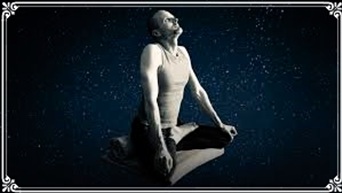
Sit in your Asana and inhale. Retain the breath. Do Jalandhara Bandha by pressing the chin against the chest. Retain the breath till you expect fainting and then exhale slowly. This is Murchha Kumbhaka as it makes the mind senseless and gives happiness. But this is not suitable for many.
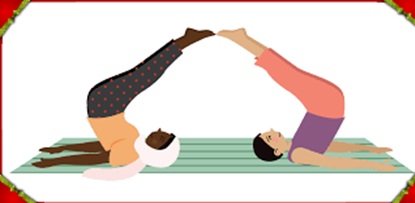
Practice of this Pranayama demands skill on the part of the student. He who practises this Plavini can do Jalastambha and float on water for any length of time. Mr. ‘S’ a Yogic student can float on water for twelve hours at a stretch. He who practises this Plavini Kumbhaka can live on air and dispense with food for some days. The student actually drinks air like water slowly and sends it to the stomach. The stomach gets bloated a bit. It you tap the stomach when it is filled with air, you will get a peculiar tympanic (air) sound. Gradual practice is necessary. The help of one who is well versed in this Pranayama is also necessary. The student can expel all the air from the stomach by gradual belching.

Kumbhaka is of two kinds, viz., Sahita and Kevala. That which is coupled with inhalation and exhalation is termed Sahita. That which is devoid of these, is called Kevala (alone). When you get mastery in Sahita, then you can attempt for his Kevala. When in due course of practice, the Kumbhaka subsists in many places without exhalation and inhalation and unconditioned by place, time and number-then that Kumbhaka is called absolute the pure (kevala Kumbhaka), the fourth form of “Regulation of breath”. Such powers as that of roaming about inspace unseen follow this last form of Pranayama. InVasishtha Samhita it is said: “When after giving up inhalation and exhalation, one holds his breath with ease, it is absolute Kumbhaka (Kevala).” In this Pranayama the breath is suddenly can restrain his breath as long as he Raja Yoga. Through Kevala Kumbhaka, the knowledge of Kundalini arises. Kundalini is aroused and the Sushuman is free from all sorts of obstacles. He attains perfection in Hatha Yoga. You can practise this Kumbhaka three times a day. He who knows Pranayama and Kevala is the real Yogi. What can he lot accomplish in the three words, who have acquired success in this Kevala Kumbhaka? Glory, glory to such exalted souls. This Kumbhaka cures all diseases and promotes longevity.