
Shatkarma - Yogic Cleansing Practices
Shatkarma consists of six traditional yogic purification practices: Dhauti, Basti, Neti, Nauli, Trataka, and Kapalbhati. These techniques cleanse the digestive tract, nasal passages, colon, abdominal organs, eyes, and respiratory system, preparing the body for advanced yoga, pranayama, and meditation.
Dhauti, Basti, Neti, Nauli, and Trataka and kapalbhati are six traditional yogic cleansing practices, known as Shatkarma, designed to purify the body and prepare it for deeper yoga practices like pranayama and meditation, focusing on digestive tract, nasal passages, colon, abdominal organs, and eyes, respectively, to balance doshas and clear energy channels.
Dhauti (Cleansing the Digestive Tract): Involves washing the mouth, throat, and upper digestive tract, often by inducing vomiting with lukewarm water (Vamana Dhauti) or swallowing and pulling out a clean cloth (Vastra Dhauti) to remove mucus and impurities.
Basti (Colon Cleansing): A yogic enema that cleanses the large intestine and lower abdomen, balancing vata dosha.
Neti (Nasal Cleansing): Cleanses the nasal passages, most commonly using saline water (Jala Neti) with a neti pot to remove blockages, improve breathing, and relieve congestion.
Nauli (Abdominal Massage/Churning): A technique to strengthen and massage abdominal organs by isolating and churning the rectus abdominis muscles, toning the core.
Trataka (Concentrated Gazing): A practice of focused, steady gazing at a single point (like a candle flame or a symbol) to purify the eyes and improve concentration and mental clarity.
Kapalbhati (Skull Shining Breath): The sixth Shatkarma, focusing on rapid, forceful exhalations to cleanse the frontal brain area and respiratory system.
These Shatkarmas clear blockages in the subtle energy channels (nadis), promoting overall physical and mental health, according to yogic tradition.
Dhauti, Basti, Neti, Nauli, and Trataka and kapalbhati are six traditional yogic cleansing practices, known as Shatkarma, designed to purify the body and prepare it for deeper yoga practices like pranayama and meditation, focusing on digestive tract, nasal passages, colon, abdominal organs, and eyes, respectively, to balance doshas and clear energy channels.
Dhauti (Cleansing the Digestive Tract): Involves washing the mouth, throat, and upper digestive tract, often by inducing vomiting with lukewarm water (Vamana Dhauti) or swallowing and pulling out a clean cloth (Vastra Dhauti) to remove mucus and impurities.
Basti (Colon Cleansing): A yogic enema that cleanses the large intestine and lower abdomen, balancing vata dosha.
Neti (Nasal Cleansing): Cleanses the nasal passages, most commonly using saline water (Jala Neti) with a neti pot to remove blockages, improve breathing, and relieve congestion.
Nauli (Abdominal Massage/Churning): A technique to strengthen and massage abdominal organs by isolating and churning the rectus abdominis muscles, toning the core.
Trataka (Concentrated Gazing): A practice of focused, steady gazing at a single point (like a candle flame or a symbol) to purify the eyes and improve concentration and mental clarity.
Kapalbhati (Skull Shining Breath): The sixth Shatkarma, focusing on rapid, forceful exhalations to cleanse the frontal brain area and respiratory system.
These Shatkarmas clear blockages in the subtle energy channels (nadis), promoting overall physical and mental health, according to yogic tradition.

Dhauti
Purification is of two kinds: Antar-Dhauti (internal cleaning) and Bahir-Dhauti (external
cleaning). Antar-Dhauti can be made in three ways. Take a fine piece of muslin cloth, 3 inches wide
and 15 feet long. The borders should be stitched well and no pieces of loose thread should be
hanging from its sides. Wash it with soap before use and make it clean. Dip it in tepid water.
Squeeze out the water and swallow one end of it little by little. On the first day swallow only one
foot. Keep it there for a few seconds and then take it out very slowly. On the next day swallow a
little more and keep it for a few minutes and then take it out slowly. Thus little by little you can
swallow the whole length, retain it for about 5 minutes and then take it out. Do not be hasty. Do not
injure your throat by rough handling. When the Kriya is over drink a cup of milk. This is a sort of
lubrication for the throat. This exercise should be done when your stomach is empty. Morning time
is good.
You need not practise this every day. Once in 4 days or a week is sufficient. This exercise
cannot at all do any harm if gradually practised. Everyone will feel a little vomiting sensation on the
first 2 or 3 attempts. As soon as the Kriya is over, wash the cloth with soap and keep it always clean.
This is an excellent exercise for those who are of a flabby and phlegmatic constitution. Gradual steady
practice cures Gulma, gastritis, dyspepsia, diseases of the stomach and spleen, disorder of
phlegm and bile. This exercise is also known as Vastra Dhauti. This is one variety of Antar-Dhauti.

Basti
‘Basti’ exercise is intended to serve the purpose of ‘enema’ to pass out the accumulation of
faeces from the intestinal canal. There are two varieties, viz., Sthala Basti and Jala Basti.
STHALA BASTI: Sit on the ground and catch hold of your toes with fingers. Do not bend
the knees. This is exactly like the Paschimottanasana, but here you need not bring your head to the
knees. Assuming this posture, churn the abdominal muscles and dominal muscles and expel the
water. It cures uriter muscles. This is Sthala Basti.
JALA BASTI: This is more effective than Sthala Basti. Take a small bamboo tube, five
inches long. Lubricate one end of it with vaseline, oil or soap. Sit in a tub of water or in a tank in
knee-level of water in Utkatasana. Insert the bamboo tube about 2 or 3 inches into the anus.
Contract the anus. Draw the water into the intestines slowly. Shake the abdominal muscles and
expel the water. It cures urinary troubles, dropsy, constipation, etc. You should not do this everyday
and make it a habit. This is only for occasional use. Do this in the morning hours before taking
meals. If you do not know how to draw in the water through the tube, then you can use the ordinary
syringe that is available in the market. By the use of the bamboo, you will know the method of
drawing water through the anus. But in the enema syringe water is being pushed in by the help of
air. That is only the difference but the result is the same in both cases. By using the bamboo tube you
can have mastery over the intestinal muscles by drawing in and pushing out the water at your command.
Neti
‘Neti’ exercise is intended for the purification of the nostrils. The nostrils must be kept
always clean. Unclean nostrils will lead you to irregular breathing. Irregular breathing will make
you sick.
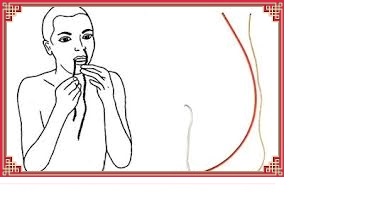
Take a fine piece of thread about 12 inches long. There should not be any knot in the middle
of the thread. It should not be too thin and weak. Insert one end of it into the right nostril and catch
hold of the other end firmly. Make a forcible, continuous inhalation and pass it inside. Then slowly
pull it out. Again in the same way pass it through the left nostril and take it out slowly. Do not injure
your nostrils through violent pulling. After some practice, pass the thread through one nostril and
take it out through the other. In the beginning you will begin to sneeze profusely when you insert the
thread into the nose. This passes off after 3 or 4 attempts. This can be practised when you find that
your nostril is blocked from cold.
Nauli
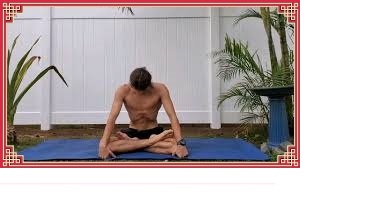
Nauli Kriya is intended for regenerating, invigorating and stimulating the abdominal
viscera and the gastro-intestinal or alimentary system. For the practice of Nauli you should know
the Uddiyana Bandha. Uddiyana can be done even in a sitting posture; but Nauli is generally done
while standing.
Stage I: Do a strong and forcible expiration through the mouth and keep the lungs
completely empty. Contract and forcibly draw the abdominal muscles towards the back. This is
Uddiyana Bandha. This is the first stage of Nauli. Uddiyana Bandha terminates in Nauli.
For practising Nauli, stand up. Keep the right leg a foot apart from the left leg. If you keep
up the feet close together, at times you may lose the balance and stumble down. Rest your hands on
the thighs, thus making a slight curve of the back. Then do Uddiyana Bandha. Do this for one week
before proceeding to the next stage.
Stage II: Now allow the centre of the abdomen free by contracting the left and right side of
the abdomen. You will have all the muscles in the centre in a vertical line. This is called Madhyama
Nauli. Keep it as long as you can with comfort. Do only this much for a few days.
Stage III: Here you should contract the right side of the abdomen and allow the left side free.
You will have the muscles on the left side only. This is called Vama Nauli. Again contract the left
side muscles and allow the right side free.
This is Dakshina Nauli. By having such gradual practices, you will understand how to contract the muscles of the central, left and right sides of the abdomen. You will also notice how they move from side to side. In this stage you will see the abdominal muscles only in the central, right or the left side. Practise this stage for a week.
Stage IV: Keep the muscles in the centre. Slowly bring to the right side and then to left side
in a circular way. Do this several times from the right to left side and then do it in a reverse way from
the left to right side. You should turn the muscles always with a circular motion slowly. When you
advance in the practice you can do it quickly; but you can derive full benefits of this Kriya when you
do it very slowly and gradually. This last stage of Nauli will appear like ‘churning’ when the
abdominal muscles are isolated and rotated from side to side.
Beginners will feel slight pain of abdomen in the first two or three attempts. They need not
fear and stop the practice. The pain will vanish away in 2 or 3 days. When Nauli is demonstrated by
the advanced Yogic student, the onlookers will be extremely surprised to look at the movements of
the abdominal muscles. They will feel as if an engine is working in the abdominal factory.
When beginners want to do Dakshina Nauli, they should slightly bend towards the left side
and contract the left muscles. When they want to do Vama Nauli, let them bend a little to the right
side. In Madhyama Nauli, push the entire muscles forward by contracting the two sides.
This exercise is not at all possible for those who have a barrel-like belly. When they find it
difficult to carry their own belly, they cannot at all dream of getting success in this Kriya. They can
also try by gradual slow practice. For getting success, they must exert hard and have rigorous
practice for a long time. Those who have a tender body can very easily learn and perform this Kriya
in a beautiful and efficient manner. In the famous Hardwar cosmopolitan platform where Punjabis and Bengali Baboos stroll in the evening with their ladies, on the banks of the Ganges, some persons demonstrate Nauli and various other Asanas and Mudras for the sake of a few pies only. They pass on from one exercise to the other very quickly. You will find the same in Calcutta, Delhi, Bombay, Madras and in all the busy centres. This is only a sort of profession. It is not at all Yoga. It is only a variety of physical feats. From the very condition of their body you will find that they do not possess all the
qualifications and aims of a Yogi, They do not even appear physically better, since they are
habituated to intoxicant drinks, Ganja, Bhang, etc.
If the Yogic exercises are done in the right way with the right mental attitude, it will surely
lead you to spiritual growth. Nauli Kriya eradicates chronic constipation, dyspepsia and all other
diseases of the gastro-intestinal system. Nauli helps Sang Pachar and Basti Kriya also.
The liver and pancreas are toned. The kidneys and other organs of the abdomen function properly. Nauli is a blessing to humanity. It is a sovereign specific ‘uni-all’ or an ideal ‘pick-me-up.’
Trataka
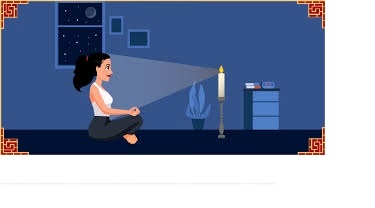
‘Trataka’ is steady gazing at a particular point or object without winking. Though this is one
of the six purificatory exercises, it is mainly intended for developing concentration and mental
focusing. It is very useful for the students of Hatha Yoga, Jnana Yoga, Bhakti Yoga and Raja Yoga.
There is no other effective method for the control of the mind. Some of the students who claim that
they belong to Jnana Yoga, neglect such important exercises since they are described under Hatha
Yogic portions. Sri Ramana Maharshi the famous Jnani of Tiruvannamalai, was doing this exercise.
You could have seen it clearly if you had been to his Ashram for his Darshan. While seated on his
sofa in his room, he used to gaze on the walls. When he sat on the veranda in an easy-chair, he
steadily looked at the distant hills or at the sky. This enabled him to keep up a balanced state of
mind. Nothing could distract his mind. He was very calm and cool always. He was not at all
distracted by any one even though his Bhaktas might be talking and singing by his side.
EXERCISES
(1) Keep the picture of Lord Krishna, Rama, Narayana or Devi in front of you. Look at it
steadily without winking. Gaze at the head; then at the body; then at the legs. Repeat the same
process again and again. When your mind calms down look at a particular place only. Be steady till
tears begin to flow. Then close the eyes and mentally visualise the picture.
Kapalbhati
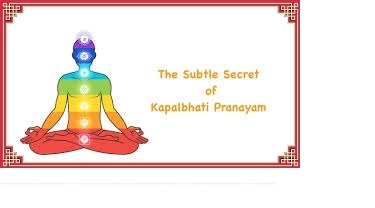
Kapalabhati is an exercise for the purification of skull and lungs. Though this is one of the
Shat-Karmas (six purificatory exercises), yet it is a variety of Pranayama exercises.
Sit in Padmasana or Siddhasana. Keep the hands on the knees. Perform Puraka (inhalation)
and Rechaka (exhalation) rapidly. Those who can do Bhastrika Pranayama can easily do this. In
Bhastrika there is a Kumbhaka (retention of breath) for a long time at the end of the required rounds.
But in Kapalabhati there is no Kumbhaka. Again in Kapalabhati, Puraka is very long and mild, but
Rechaka is too quick and forcible. In Bhastrika, Puraka is done as quickly as Rechaka. This is the
only difference between Kapalabhati and Bhastrika. In Kapalabhati, Rechaka should be done
forcibly and quickly by contracting the abdominal muscles with backward push. To start with, have
only one expulsion per second. In the beginning do 10 expulsions per round. Gradually increase 10
expulsions to each round till you get 120 expulsions for each round.
It cleanses the respiratory system and nasal passages. It removes spasm in bronchial tubes.
Consequently Asthma is relieved and cured also in course of time. Consumption is cured
by this practice. Impurities of the blood are thrown out. The circulatory and respiratory systems are toned to a considerable degree. Shat-Karmas are intended for the purification of the body. When Nadis
are impure Kundalini cannot pass from the Muladhara to Sahasrara Chakra. Purification of Nadis is
effected through Pranayama. For Pranayama, you should know well about Prana.